
Oct 28, 2022

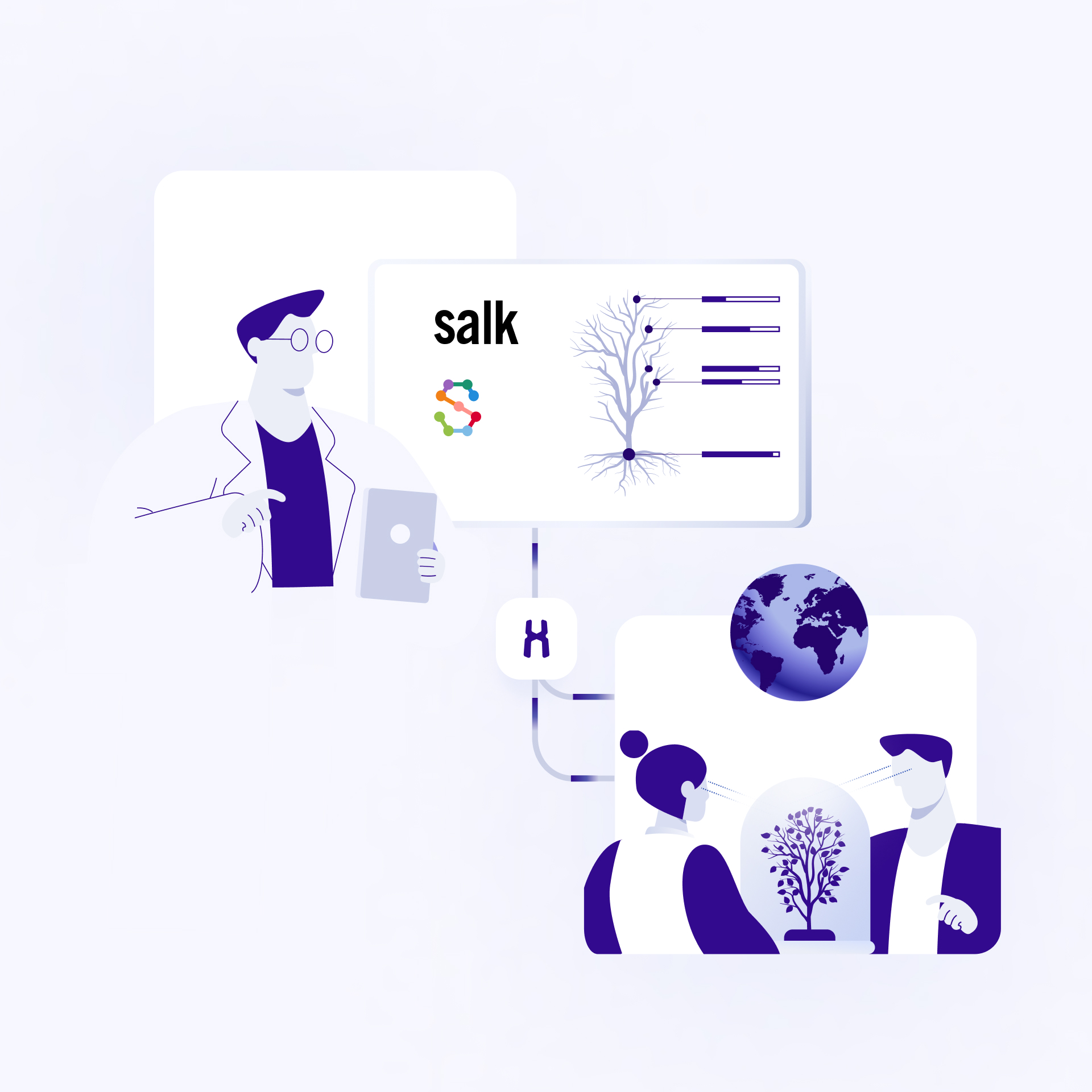
As part of our recently announced Impact Projects initiative, we are delighted to present to the community our work with the Salk Institute for Biological Studies, and, in particular, with the research team engaged in SLEAP.AI.
Named after the inventor of the Polio vaccine, Jonas Salk, the institute is home to an internationally acclaimed team of scientists that are seeking to find cures to many of the world’s diseases
The award-winning team at Salk engage in a broad scope of life sciences, with research including everything from immunology, to genetic conditions. Salk is at the frontier of scientific research, and is dedicated to discovering new learnings and insights that are as yet unknown to science
There are many departments and technologies within the Salk Institute. One of them is SLEAP.AI.
SLEAP.AI is an animal and plant pose tracking software. It is a data annotation tool that is being used to study the social interactions between animals and plants, particularly within the context of those which have genetic conditions.
SLEAP.AI has millions of images and videos of animals interacting with each other. Each image has to be annotated. To effectively gain insights from animal behavior, the ML algorithm and neural networks need to know basic information, such as: Where is the mouse’s tail? Where is the plant’s leaf?
Currently, a machine could do this labeling. But not at the accuracy that is required by this level of research. So, it needs to be done by humans.
We are working on a way for the SLEAP team to upload these raw, unlabeled images to HUMAN Protocol, and for HUMAN Protocol Workers to complete this work.
For SLEAP, the benefits of using this are numerous.
Part of the problem that is often faced by research level machine learning is the lack of access to quality, fresh data to fuel their research. HUMAN Protocol provides this solution, allowing any scientist to bring the data annotation tools they require to the Protocol, while the Protocol automates the fulfillment of the work across global pools of data labelers.
For the latest updates on HUMAN Protocol, follow us on Twitter or join our Discord. Alternatively, to enquire about integrations, usage, or to learn more about HUMAN Protocol, get in contact with the HUMAN team.

